Palm Tree Diseases & Pests in South Florida: Complete Guide
Learn about the most common diseases and pests affecting palm trees in South Florida, including lethal bronzing disease, ganoderma rot, and palm weevils.
Introduction
Palm trees are iconic to South Florida's landscape, but they face numerous threats from diseases and pests. Understanding these threats is essential for maintaining healthy palms and protecting your property's aesthetic value. This guide covers the most important diseases and pests affecting palms in South Florida, their symptoms, and prevention strategies.
Lethal Bronzing Disease (LBD)
The Most Dangerous Palm Disease
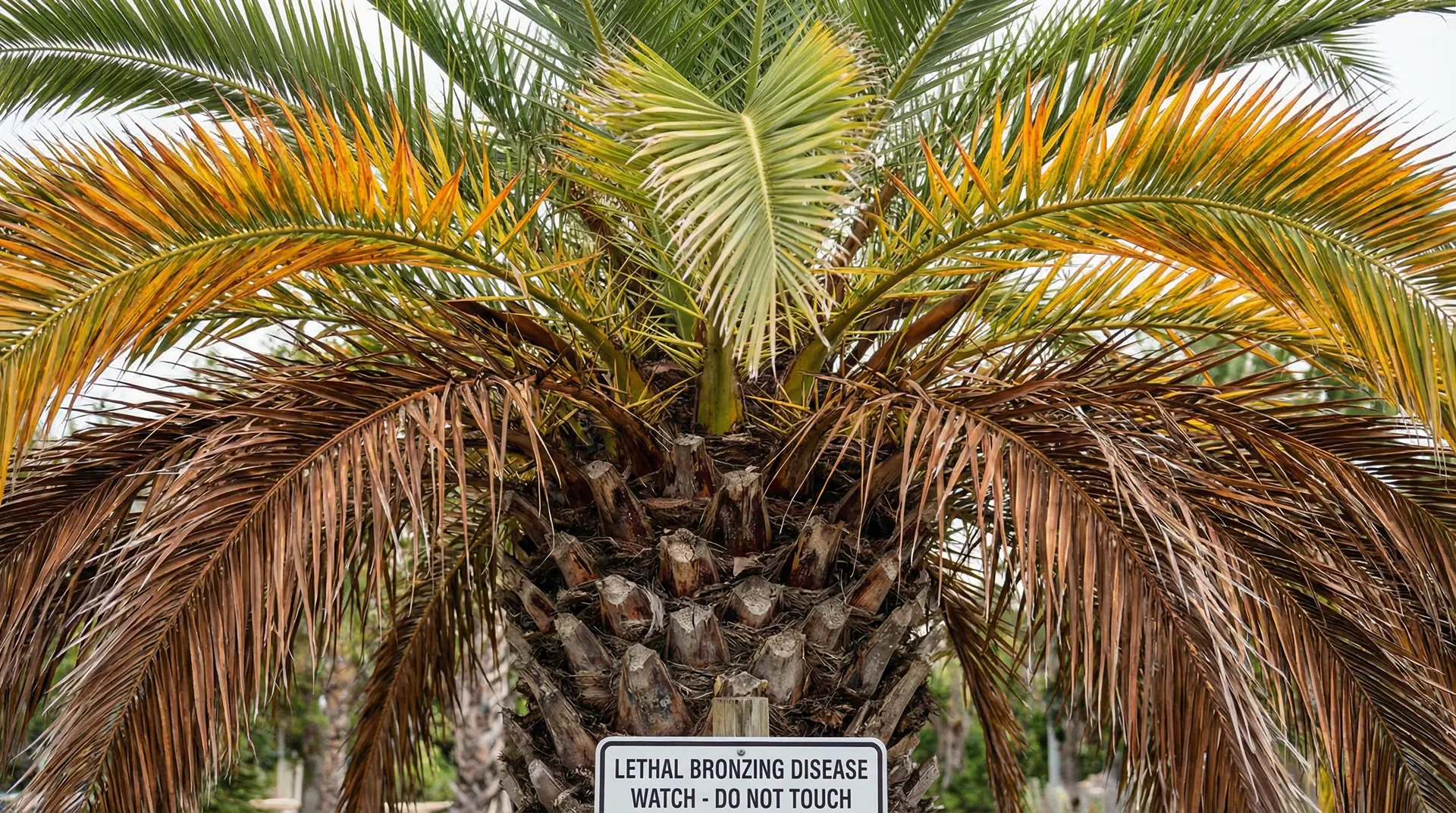
Lethal Bronzing Disease is a devastating phytoplasma infection that has spread to over 30 Florida counties since its discovery in Hillsborough County in 2006. This bacterial disease affects multiple palm species including Phoenix (date and Canary Island palms), Queen, Cabbage, Pindo, and Coconut palms.
- •Cause: Phytoplasma palmae (bacteria-like organism)
- •Vector: Palm cixiid insect (Haplaxius crudus)
- •Symptoms: Early flower/fruit drop, leaf discoloration starting with older leaves, bronze-colored foliage, progression to spear leaf death
- •Timeline: 2-3 months from first symptoms to death
- •Treatment: No cure. Immediate removal required. Preventative antibiotic injections (oxytetracycline) for neighboring palms
Ganoderma Butt Rot
Fungal Decay at the Base
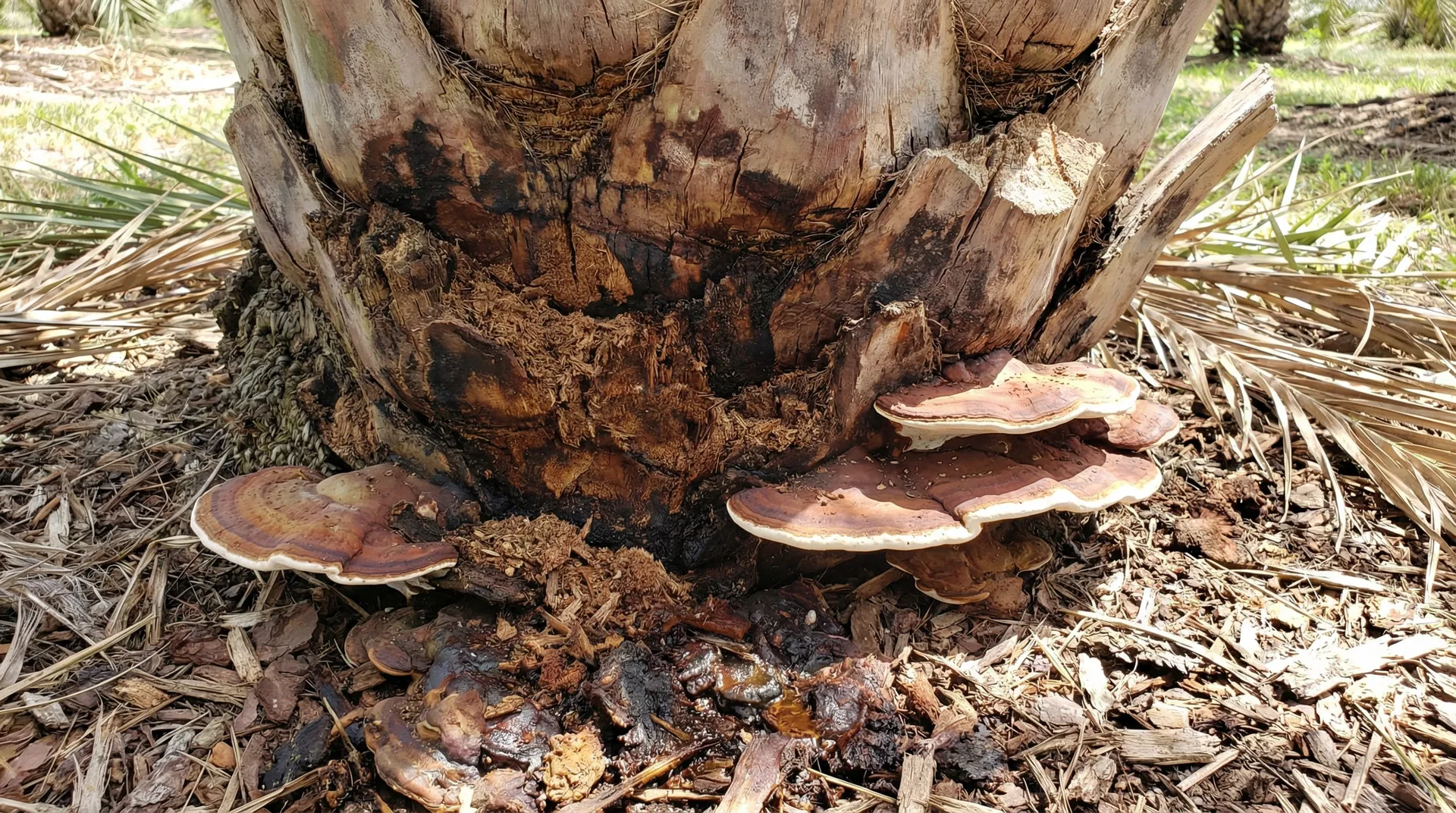
Ganoderma butt rot is a fungal disease that enters palm trees through wounds in the trunk. This disease causes soft, rotted areas near the base of the tree and is particularly dangerous because it weakens the structural integrity of the palm.
- •Cause: Ganoderma fungus entering through trunk wounds
- •Symptoms: Soft rotted areas at base, dark discoloration, fungal conks (shelf-like structures), slow growth, wilting fronds
- •Affected Species: Multiple palm varieties
- •Treatment: No cure. Prevention is essential
- •Prevention: Avoid trunk damage, sterilize pruning tools, maintain proper drainage
Palm Weevils
Destructive Beetle Pests
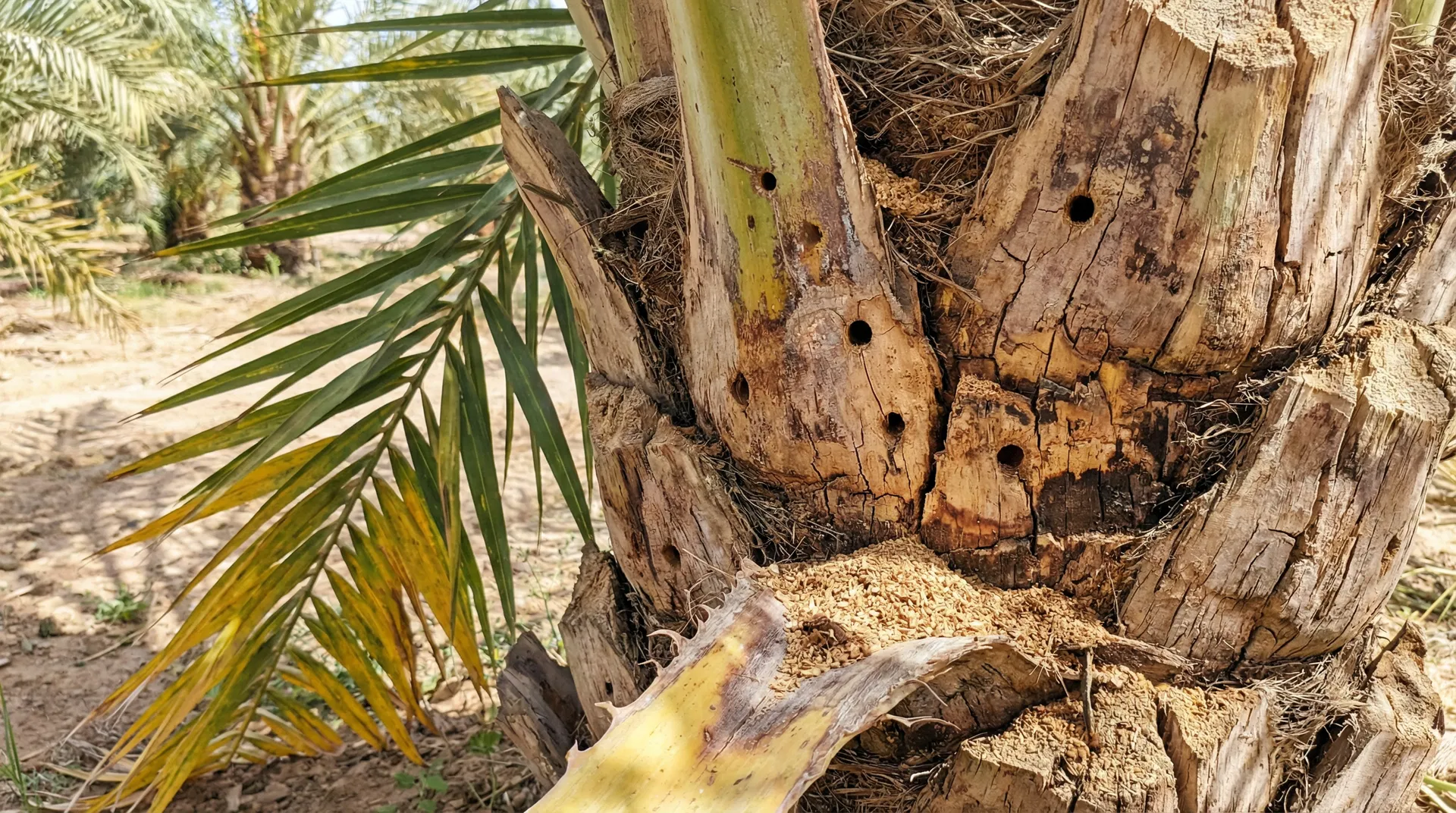
Palm weevils are large beetles whose larvae tunnel through palm tissue, causing significant damage. These pests can quickly kill a palm tree if left untreated.
- •Damage: Larvae perforate and consume internal tissues
- •Symptoms: Entry holes in trunk/frond bases, sawdust-like frass material, yellowing and wilting fronds
- •Treatment: Insecticides, removal in severe cases
- •Prevention: Regular inspections, early detection
Other Important Diseases
Fusarium Wilt & Bud Rot
Fusarium wilt is a fungal disease that enters through roots or wounds, causing yellowing, wilting, and dark discoloration. Bud rot, caused by various fungi, typically appears after heavy rainfall and affects new fronds with yellowing, darkening, and soft, pasty tissue in the growing bud.
- •Fusarium Wilt: No cure. Prevention through avoiding overwatering and tool sterilization
- •Bud Rot: Fungicides effective if detected early. Prevent through good drainage and avoiding excess moisture
Prevention & Care Strategies
Protecting your palm trees requires a comprehensive approach combining regular monitoring, proper maintenance, and professional intervention when necessary.
- •Proper Watering: Deep but infrequent watering promotes healthy root systems
- •Tool Sterilization: Always sterilize pruning tools between cuts
- •Regular Inspections: Check palms monthly for signs of disease or pest damage
- •Preventative Treatments: Apply fungicides and insecticides during rainy season
- •Avoid Trunk Damage: Protect trunks from lawn equipment and construction damage
- •Drainage: Ensure good soil drainage to prevent fungal infections
- •Professional Monitoring: Have certified arborists inspect valuable palms annually
When to Call a Professional
If you notice any signs of disease or pest damage on your palm trees, contact Harpoon Pro immediately. Early intervention can save your palms and prevent spread to neighboring trees. Our certified pest control specialists can identify diseases, recommend treatment options, and implement prevention strategies tailored to your property.